
Orion Township City Directory Collections
There is no verified public list of complete Orion Township city-directory runs. The strongest local path begins with the Orion Township Public Library's history resources and catalog, then expands to the Library of Michigan, Oakland History Center at Pine Grove, and Oakland University Special Collections. For Orion Township historical research, the local catalog exposes Oakland County directories, federal census material, an Oakland County Genealogical Society surname directory, an 1896 atlas, and Oakhill Cemetery burials. Confirm a title, locality, call number, and edition before treating a catalog lead as a volume that is immediately available.
| Collection or source | Documented period | Where held | Access and value |
|---|---|---|---|
| Orion Review newspapers | Digitized run; exact endpoints not stated | Orion History Archive | Search or browse notices, obituaries, and dated community references |
| Oakland Press | 2004 to current | Orion Library remote database | Full text remotely, day and night, through the provider interface |
| Orion yearbooks | Years vary; exact run not stated | Orion History Archive / library catalog | Names, portraits, activities, and class context where an item is available |
| Polk directories | Late 1800s onward in statewide guide; exact Orion run unknown | Library of Michigan | Surname and street research; fields vary by volume |
| Bresser / criss-cross books | Late 1960s onward in statewide guide; exact Orion run unknown | Library of Michigan and possible county collections | Address-order research, subject to the volume held |
| Heir-Lines | 1978 to 1998 | North Oakland Genealogical Society / library reference | Research lead, marked unavailable on the captured library page |
The table is deliberately cautious. Public research did not expose an Orion Township directory scan or definitive publisher and year run. A missing online result can mean the item is on a shelf, on microfilm, in closed stacks, unavailable through a legacy project, or simply not held. Ask the library for the exact series before planning a visit.
Orion Township Archive Sources
Orion Library's History and Genealogy resources point to the Orion History Archive, where Orion Review newspapers, yearbooks, obituaries, historic photographs, and other local material have been digitized. The library says the Orion Review material moved into that archive. It also links Michigan Memories, MyHeritage Library Edition, and the Orion Historical Society. These are useful companions to a city directory because a newspaper notice or yearbook can anchor a person, road, or community term to a date.
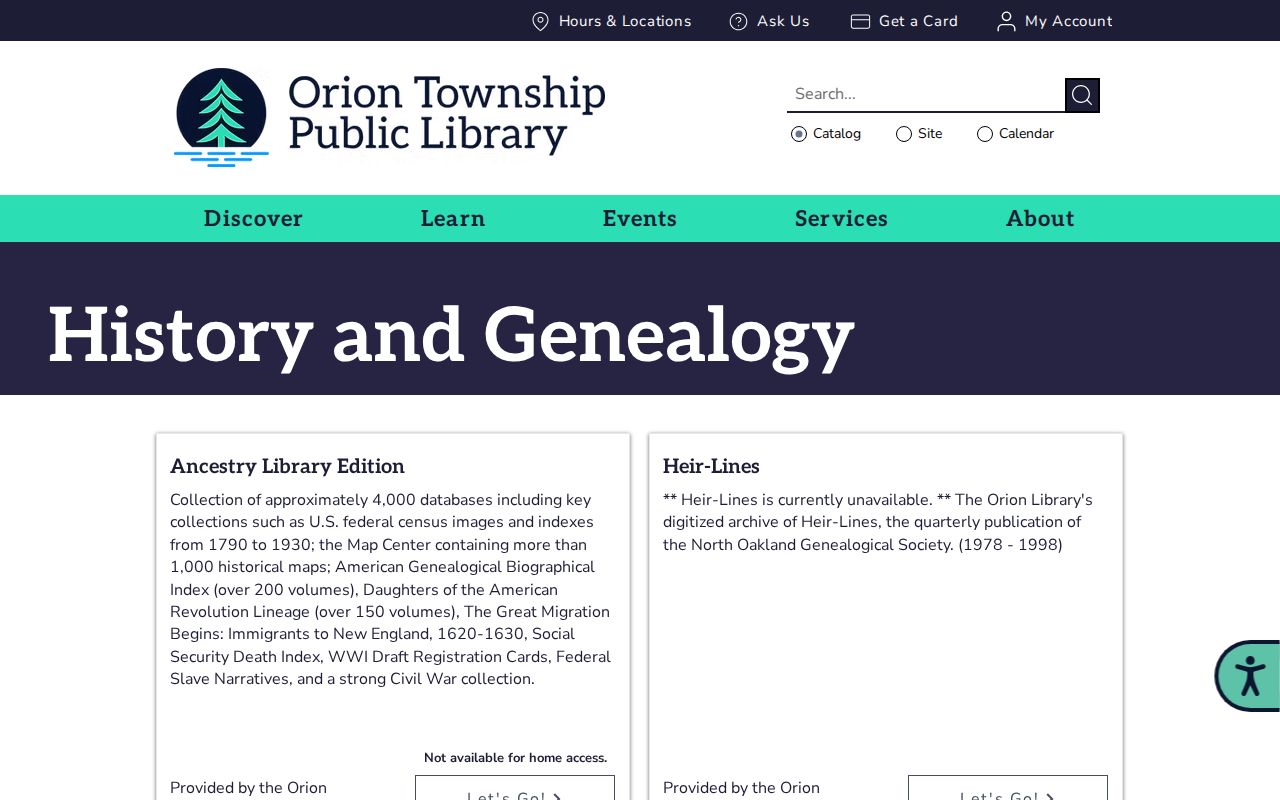
The library's remote Oakland Press access covers 2004 to current according to the captured page. Heir-Lines for 1978 to 1998 and Orion Legacy or Time Tracs were marked unavailable at capture, so they should be treated as leads to verify rather than searchable sources promised to every reader. The Orion Township library is at 825 Joslyn Road, Lake Orion, Michigan 48362, and lists 248-693-3000.
Orion Historical Society directs its local preservation work through the library address. Search an archive with a road, subdivision, lake, or year as well as a surname. Bald Mountain, Indianwood, Keatington, Paint Creek, Long Lake, Joslyn Road, and Orion Review are useful local search terms when they appear in a dated source.
Note: A newspaper or yearbook result is dated context, so compare its spelling and place label with another source before linking records.
Orion Township Digital Directory Leads
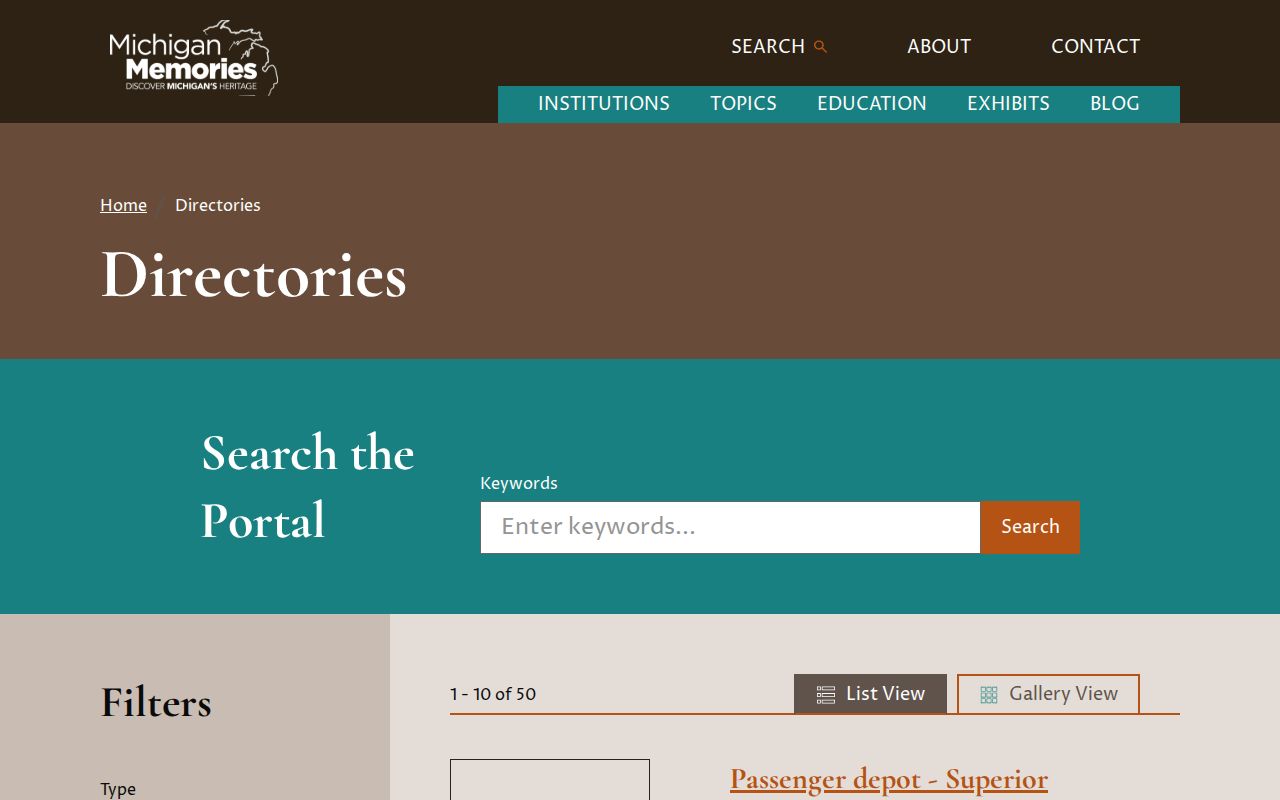
Michigan Memories' directory topic is a free digital starting point for Michigan collections. It is a collection-level search shell, not proof of a complete Orion Township run. Search the locality, nearby community names, county, publication title, and an estimated year. When a record turns up, preserve its collection name, item title, date, holding institution, and link before treating it as evidence.
Digital discovery is only one channel. The Library of Michigan's city-directory guide describes print directories on 2F South, some volumes in the Rare Book Room, and microfilm or fiche in the Microfilm Room. It also names Ancestry Library Edition and HeritageQuest as online options. Those access points can reveal an edition that a general web search does not surface.
For a county-level lead, the Orion catalog and archives may be more useful than an exact phrase search. Oakland University Special Collections lists county tax rolls and city records back to the 1830s, Oakland Press microfilm from 1845, photographs, and local-society newsletters. Each remains an archival lead until the holding institution confirms the item and its access rules.
Note: Keep the collection name, item date, holding institution, and URL with every digital hit, because collection coverage and search fields vary.
Reading an Orion Township City Directory
No rendered Orion city directory entry was available in the research capture. The documented local and statewide sources do establish how to read a printed entry without inventing a named household. First identify the exact volume and its abbreviation key. Then transcribe the spelling, page, publisher, edition year, and the label attached to every field. A city directory is a time-stamped publication, so a name or address belongs to that edition unless another dated source confirms more.
| Name | Surname and given name or initials. Retain spelling variants rather than silently normalizing them. |
|---|---|
| Household marker | A spouse in parentheses, widow notation, or head-of-household convention when the volume uses one. |
| Work notation | Trade, office, organization, or other activity when printed in that particular volume. |
| Address | Street and house number. Compare it with the edition year and municipal or postal label. |
| Tenure or telephone | An owner or renter mark, phone, first year at address, or relocation note may appear in Bresser-style books. |
| Record placement | Title, publisher, edition, page, scan link, or shelf and call number. |
- Criss-cross directory
- An address-order directory that begins with a street and house number instead of a surname.
- Householder index
- A name arrangement that identifies the listed household head under the volume's own convention.
- Abbreviation key
- The volume's legend. Check it before expanding a printed shorthand into a claim.
Polk books may include surname, household, ownership, and street information. Bresser criss-cross volumes may add phone, head of household, owner or renter status, first year at an address, and relocation notes. Fields vary by edition, so the key and scan or shelf citation remain part of the record.
Orion Township Directory Shelves
The Library of Michigan, at 702 West Kalamazoo Street in Lansing, is the statewide shelf route for printed directories. Its guide places print directories on 2F South, with some in the Rare Book Room and microfilm or fiche in the Microfilm Room. Call 517-335-1477 to verify an edition and access conditions. The guide is valuable because it documents directory formats, but it does not establish which exact Orion Township volumes are currently on the shelf. Orion Township researchers should confirm the locality before travel.
Oakland History Center at Pine Grove in Pontiac holds family, business, and place histories, maps, early documents, manuscripts, yearbooks, and Oakland County Genealogical Society material. Its stacks are closed, so call ahead. Typical displayed hours were Tuesday through Thursday, 11 to 4. The OCGS library listed the same appointment hours, a $5 nonmember daily-use charge, and a $5 image or reference-photo fee at capture.
Use an archive request that names the locality, title or format, date range, call number if known, and whether an image or transcription is needed. Ask whether an item is original, an index, a transcript, or a user-contributed copy. That level of description helps distinguish a directory lead from a reproduced excerpt.
Tracing Orion Township Households
Tracing a household through dated editions means comparing snapshots. Start with a later address, then identify the parcel or legal description when it is relevant. Search the same street and number in an earlier criss-cross volume, and compare names, spouse or household notation, and the printed activity field. If a number changes, use a subdivision plat, deed legal description, map, newspaper notice, or Township confirmation before calling it the same place.
- Locate the most recent dated directory, newspaper, yearbook, or archive reference and record its full citation.
- Search backward by surname and, where a volume supports it, by street and house number.
- Pair each directory year with the nearest released federal census and keep their different geographic labels visible.
- Compare the parcel, plat, or deed trail when an address or subdivision name changes.
- Use an obituary, cemetery register, Probate file, or local newspaper only as a dated follow-up, not as a substitute for an unverified directory entry.
A disappearance from a directory can reflect a move, death, a changed spelling, a different household listing convention, or a missing volume. It does not establish which event occurred by itself. For present parcel and address work, use the Orion Township street directory rather than stretching an old book past its date.
Note: Keep the edition year and the source's township, village, postal-city, and street labels together when building a historical household timeline.
Orion Township Records Lost to Fire
Local history sources report that a fire destroyed Orion township records from 1835 to 1859. That loss explains why a family or place trail may need substitutes: recorded deeds, local newspapers, church or cemetery sources, neighboring archival series, and later directory evidence. It does not prove that a person was absent from the area, and it does not make an undated family tree a replacement for a surviving record.
The research also identifies a Library of Congress Lake Orion Sanborn map item with five sheets dated April 1934 through March 1943. It can help with historical building and street context in the village and surrounding postal area. It is not current parcel evidence and should not be used to identify a present owner or household.
| 1835 | Orion was separately organized, according to local-history sources. |
|---|---|
| 1835 to 1859 | Township records were reportedly destroyed by fire, creating a documented early records gap. |
| 1934 to 1943 | The Lake Orion Sanborn item provides five dated map sheets for historical context. |
| Digital era | Orion Review material moved into the History Archive; exact first digitized-directory year was not located. |
Orion Township Place Name Keys
Place names often solve a hard directory search. Lake Orion can be a postal city and community name, but the Village of Lake Orion is a separate jurisdiction from Orion Township. Mahopac, Bald Mountain, Indianwood, Keatington, Paint Creek, Long Lake, Oakhill Cemetery, Pine Grove, and Orion Review can each be useful query terms when paired with a year and a record type. Keep the form printed in the source, then add a separate municipal field after checking the parcel or Township record.
The township association inventory offers additional subdivision and lake spellings. Those names can lead to dated newsletters, plat references, or local reporting, but not a complete membership roster. This geographic context keeps city-directory research focused on provenance, rather than treating a neighborhood term as personal proof.